Everyday language
Greetings, expressions, stories, and family words can hold memories that formal records miss.
Culture lives in the everyday
Heritage is not a sealed collection from the past. It is practiced, remembered, questioned, and reshaped in homes and communities across generations.
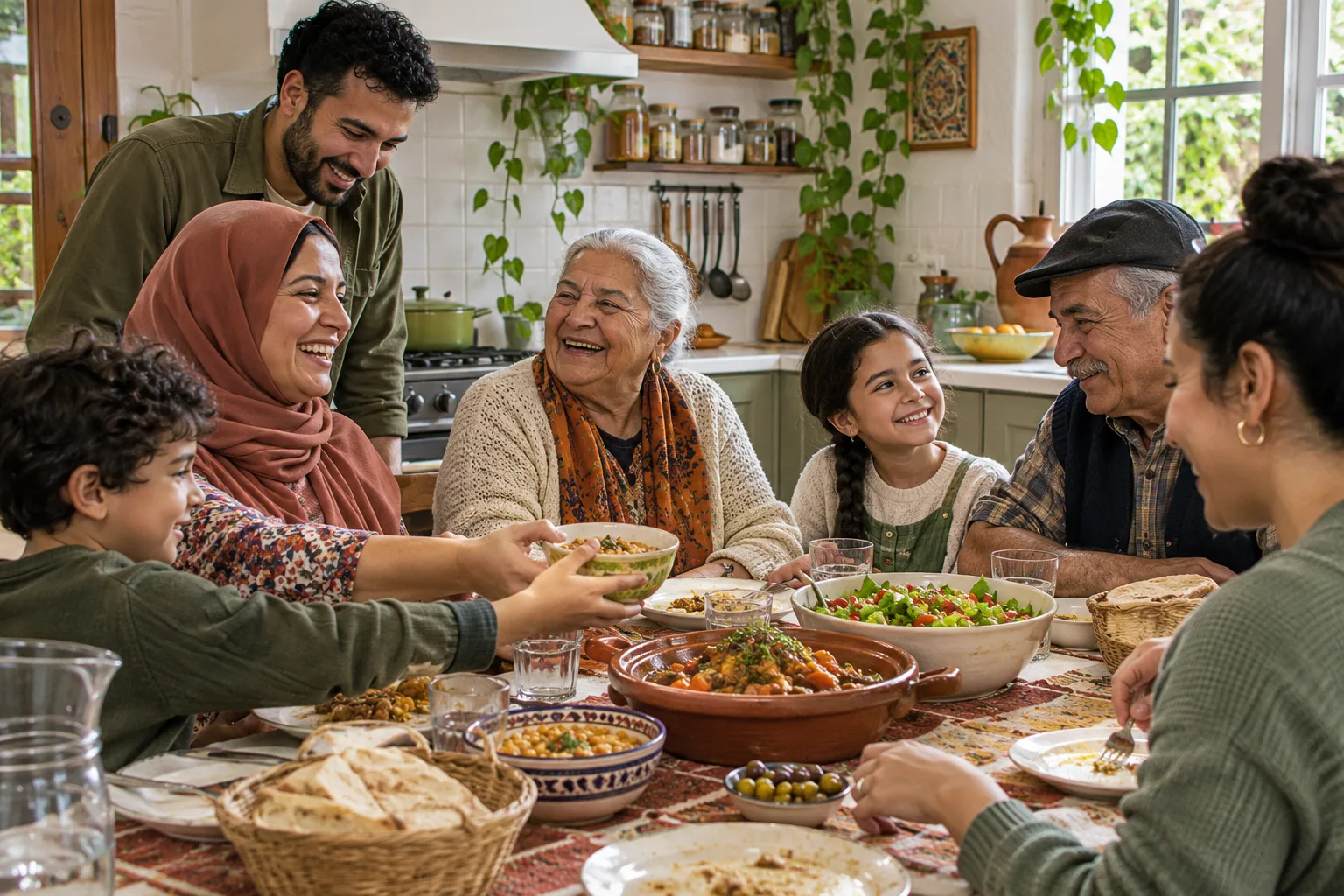 Stories held across generations
A tradition may be a holiday meal, a greeting, a song, a way of welcoming guests, a craft technique, or the habit of calling relatives on a certain day. Some customs are passed down intentionally; others are absorbed through repetition. When families move, they bring some practices with them, leave others behind, and make new ones in response to new neighbors, ingredients, schedules, and circumstances.
Language can connect generations through jokes, nicknames, prayers, work terms, and ways of showing respect. A household may use different languages with different people or in different settings. Children and adults may understand a language differently, and fluency can shift over a lifetime. These patterns are not evidence of a tradition disappearing; they are part of how families navigate belonging.
When recording a phrase, ask the speaker to repeat it slowly and explain its context. Note who uses it, when it is appropriate, and whether a literal translation misses its tone. If you plan to publish a word list, invite a fluent speaker to review spelling and meaning.
Recipes travel through practice as much as through written instructions. A cook may measure by sight, substitute an ingredient that is available locally, or change a dish for a new household’s needs. Keep those adjustments in the record. A recipe’s history includes the people who taught it, the tools they had, the occasions it marked, and the ways it changed.
Record quantities where possible, but do not treat a written measurement as the only authentic version. Ask what the cook watches, smells, or feels for. Those cues can make tacit knowledge visible while respecting the maker’s own method.
Explore by practice
Greetings, expressions, stories, and family words can hold memories that formal records miss.
Recipes document ingredients, adaptation, shared labor, and the occasions that bring people together.
Gatherings mark life events and help people create continuity, even when the form changes.
Skills and heirlooms can connect people to teachers, places, and community knowledge.
Showing all practices.
Families adapt when work schedules, school calendars, distance, or local rules make an old routine difficult to keep. They may move a gathering to a different day, combine customs, or create a new ritual for relatives who live far apart. Ask what the practice means to the people who observe it rather than deciding in advance what counts as authentic.
A grandparent, parent, and child may tell different stories about when a tradition began or why it matters. Invite each person to speak in their own terms. Preserve disagreements and changes as part of the record. A tradition belongs to the people who practice it now as well as those who remember earlier forms.
Before photographing a ceremony, recording a song, or writing about a sacred or private practice, ask whether documentation is welcome. Some knowledge is meant to stay within a family or community. Make the intended use clear, identify who should be credited, and let participants set limits on access and sharing.
“What do we do this way, and what does it mean to us today?”
A conversation starter for families and community groupsFor a practical way to preserve memories, visit Family History. For classroom and community prompts, explore the Learning Library.