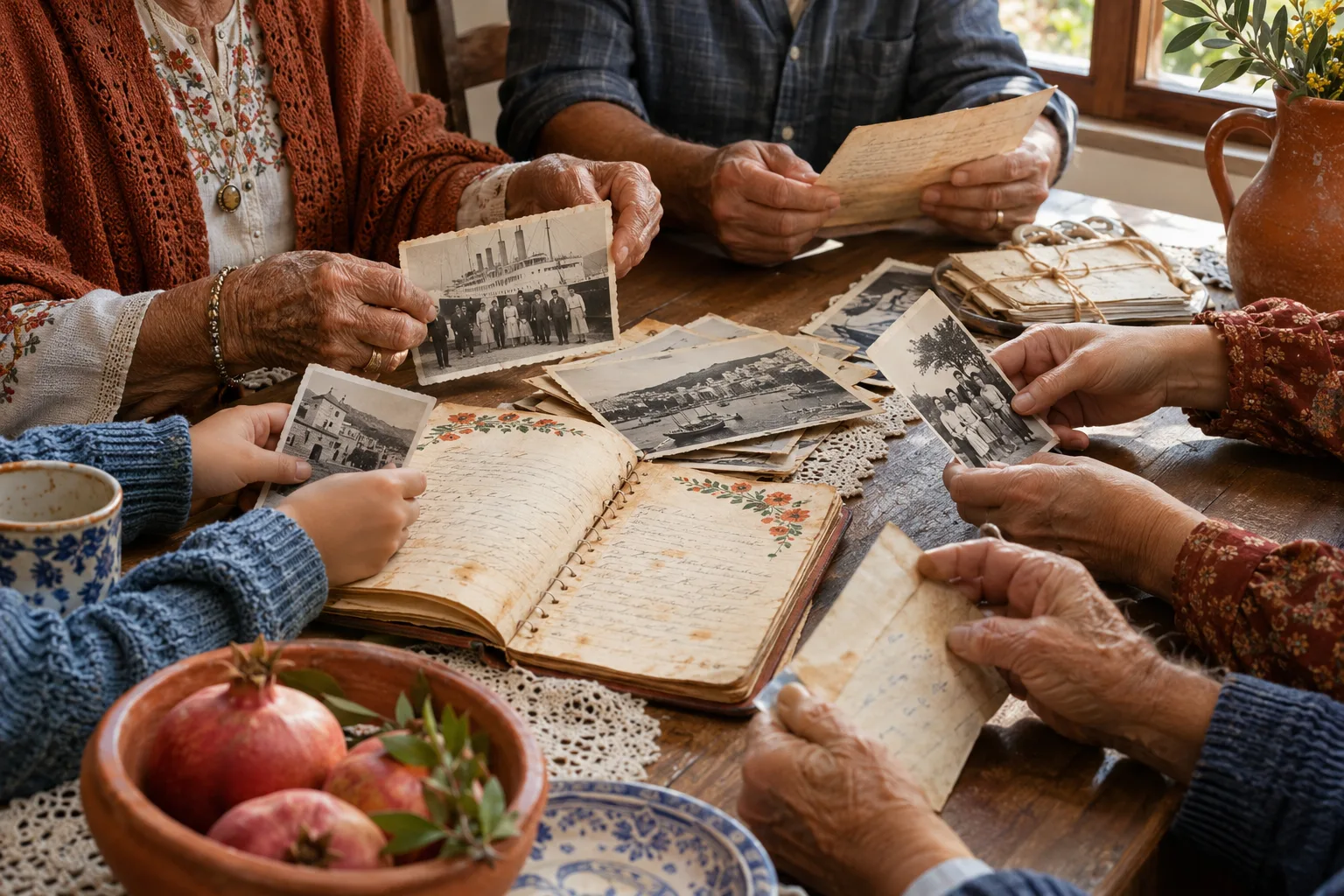
Family history can begin with a single question: Who is named in this photograph? A careful archive preserves more than names and dates. It records where information came from, what a family member remembers, which details are uncertain, and whether the material can be shared.
1. Choose a small starting point
Pick one relative, place, document, or period. A narrow question makes it easier to follow up than a broad request to “tell me everything.” You might ask about a move between two cities, a family name, a school, or how a holiday was celebrated in a particular home.
2. Ask for a conversation, not a performance
Tell the person why you want to talk, how you plan to preserve the information, and who may see it. Ask if recording is comfortable. Let them skip questions or stop at any time. Some people may prefer to share in writing or with another family member present.
Questions that leave room for memory
- What place do you remember most clearly from that time?
- Who was part of the decision or journey?
- What did an ordinary day look like after the move?
- Which words, foods, sounds, or routines do you associate with home?
- Is there anything you would rather keep within the family?
- Who else might remember this differently or add useful context?
3. Save the source alongside the story
For every note, record who provided it, when you spoke, the language used, and whether the information is firsthand or remembered from someone else. For documents, note the holder, title or description, date if known, and where the original is stored. Keep a scan or photograph only when the owner agrees.
Use approximate dates when needed. “About 1965” or “before my mother started school” is more reliable than a precise date created from a guess. If two relatives remember an event differently, preserve both accounts and identify the source of each version.
4. Organize photographs and documents
Make a digital copy of important files and use descriptive filenames, such as “Garcia-family-kitchen-approx-1982.” Add a short note with names, location, event, who identified the people, and how certain the identification is. Keep the original document safe and avoid writing on it. For fragile, valuable, or historically significant material, consult an archivist or conservator before cleaning or repair.
5. Separate family memory from verified record
Family accounts are valuable evidence of lived experience, but dates, spellings, and locations can shift over time. Compare claims with records when appropriate and accessible. A census entry, passenger list, newspaper, or certificate may add context, but it does not tell the whole story. Official documents can also contain errors or use names and categories that the person did not choose.
Free starter sheet
Keep a consistent record
Download a simple CSV template for tracking interviews, photographs, documents, sources, and permission notes.
6. Decide what stays private
Not every memory belongs online. Ask separately about preserving a story privately and publishing it publicly. Agree on attribution, access, and any time limit or restrictions. If a story includes living relatives, consider how publication may affect them and offer a chance to review sensitive details.
A simple archive entry
- Title or description
- People, places, and approximate date
- Contributor or source and date collected
- Original language and translation notes, if applicable
- What is confirmed, uncertain, or disputed
- Permission and access preference
Explore Migration Stories for interview context and Heritage & Traditions for ideas about documenting everyday practices.